A Softer Escape

Sometimes relief does not look like escape. Sometimes it looks like stillness.

I had to go to a temple in Mumbai recently. I agreed mostly because I had never been there before. Otherwise, I usually avoid temples. Not because I am not a Hindu or a believer, it is different.

I believe deeply, in Christianity, and in the overall existence of something far more powerful than us. But I tend to avoid crowded performances of belief of any kind. Unless a place is ancient, quiet, beautiful, or carries some sense of stillness, I generally stay away.

And of course, this one was crowded. Mumbai crowded. The kind where you stop feeling like a person and start feeling like part of a moving organism made of elbows, sweat, noise, impatience, devotion, and urgency. I already avoid crowds in general, so very quickly my only thought became I need to get out of here.

Then, weirdly, I think God helped.
A tiny kitten appeared from nowhere.
Right in the middle of all those moving legs.

I picked her up almost instinctively. Honestly, she could have panicked, scratched me, escaped, disappeared back into the chaos. Initially she did have that nervous energy, trying to move, figuring out what was happening, deciding whether I was danger or safety.

But then something changed.
A few minutes later, she was completely asleep on me. Purring continuously. Entirely relaxed.

While everyone else was inside the temple praying, I was outside holding this tiny creature that somehow made my belief stronger than the temple itself did.

That moment felt strangely personal.
Like God saying: “You wanted relief? Here.”
Not through some grand miracle. Not through words. Just through a kitten.

And I think that is what stayed with me, the idea that maybe God does not always remove you from misery dramatically. Sometimes he simply places a small opening in front of you. A way out. A softer corner. A pause.

You still have to notice it.
You still have to pick it up.
You still have to step aside from the chaos and allow yourself to receive it.

The kitten’s side of the story interests me too.

She was literally picked up from a difficult situation, surrounded by noise, legs, uncertainty, danger. Her first response was nervousness. Which is normal. Probably intelligent.

But then she settled. I don’t think every cat would have. Maybe she sensed calm. Maybe animals understand nervous systems better than humans do. Maybe she realized resistance was unnecessary. Or maybe she simply understood that some battles are unfair.

When you are overpowered by the situation around you, constant panic does not always save you. Sometimes the only useful thing left is to regulate yourself. To soften. To purr.

I think about that often while looking at the world now. Wars. News cycles. Anger everywhere. Constant helplessness.

And sometimes all you can really do is sit quietly at home and purr. Stay soft. Stay calm. Do your small part properly. Refuse to let the chaos enter your nervous system completely.

Maybe that is survival too.

Build Things That Carry Your Fingerprints

Maybe the internet connected us deeply while quietly making us more alike.

A few days ago, I told a colleague something that stayed with me long after the conversation ended. “You’re almost like a clone of me,” I laughed. “Just a five-year younger model.” It was a casual observation at first. But on my way back home, the thought kept replaying in my head.

The way we approach work. The way we process pressure. Even the strange ways we become anxious about things before they happen. So much of it felt familiar. And then a quieter question emerged beneath it: How much of who we are is actually ours?

Maybe both of us simply consumed similar ideas over the years. The same productivity advice. The same internet psychology.
The same conversations around ambition, anxiety, growth, identity. If two people absorb enough of the same inputs, do they slowly begin to think alike too? Not intentionally. Algorithmically.

But maybe this is also deeply human. As people, we have always wanted to belong somewhere. To feel understood. To recognize parts of ourselves in others and feel less alone because of it. Communities shape us. They always have.
Families, cities, religions, friend circles, workplaces, the books we read, the people we admire. And there is nothing wrong with that.

The problem perhaps begins when belonging quietly turns into imitation. When we stop absorbing ideas and start outsourcing identity itself. The internet gave us access to infinite inspiration, but sometimes I wonder if it also made originality harder to hear beneath the noise.

We no longer create ourselves slowly. We assemble ourselves from fragments we consumed online. A quote here. A podcast there. A framework. A personality trait turned into content. A way of speaking picked up unconsciously from people we watch every day. And eventually, many of us become polished versions of familiar templates.

Modern life optimized everything beautifully. But maybe it accidentally erased friction too. And friction is where personality forms. The rough edges. The slow experiments. The awkward phases no one sees. The years spent becoming someone before broadcasting it.

A polished life is not always a personal one. And maybe that is why so many people quietly feel disconnected from themselves despite being endlessly exposed to “self-expression.” We consume identities faster than we build them. That thought stayed with me the entire evening:

Maybe the future becomes beautiful again when people stop trying to become optimized versions of each other. Create before consuming. Write before comparing. Build before scrolling. Think before absorbing everyone else’s thoughts about what your life should become.

Because perhaps identity is not something we discover online. Perhaps it is something we slowly leave behind in the things we create. In the work shaped by our specific scars. In the conversations we have honestly. In the art that still carries imperfections. In the choices that make no sense algorithmically, but feel deeply ours.

And maybe what the world needs now is not more polished people, but more people willing to leave their fingerprints on what they create.

Detach and Do It

Doing what needs to be done, especially when it is difficult to actually do it

This might not be for everyone. If your work is your passion and you wake up excited to do what you do, this might not fully resonate with you, and that’s a good place to be. But if you’re someone who works because you have to, not because you love it, this might feel familiar.

I remember a bit from Samay Raina on detachment. “Do whatever you are doing, not with your heart, but with your brain. Detach and do it.” He was in a tough situation; he was having an anxiety/panic attack, yet he got up on the stage and delivered the stand-up. He could have let go of one show, but he didn’t. Not all can have that level of mental strength, but this truly comes from detachment. Though you might love what you do and have actually made a life out of your passion, there might come a day when you still have to deliver even when you are not in state to.

Do what you need to do. Deliver what you’re supposed to. Because the world spins anyway. In Samay’s case, it literally did. He laid low and came back stronger, and now a million views are getting added each day to his YouTube first-ever stand-up.

It’s a clear example of how, no matter how we feel, no matter how overwhelmed or stuck we are, things keep moving. Which means, in some strange way, we have to as well.

This also reminded me of a similar argument that was brought on screen a while ago, when cinema made you think instead of creating propaganda. (if you know you know #iykyk) There’s this scene from Munna Bhai M.B.B.S. where Boman Irani plays a surgeon and explains how as doctor his hands are steady at work, but if he has to do a surgery for his own daughter, it might shake.

The skill doesn’t disappear. The experience doesn’t vanish. But something changes. Attachment enters, and everything that was once effortless becomes difficult.

Work, at its core, is just that, work. You won’t always feel like showing up, and you definitely won’t be liked by everyone while doing it. But that doesn’t change the fact that there are things expected of you, things that need to be done.

And sometimes, the only way to get through that is by detaching just enough to focus on the task, not the noise around it. But at the same time, I don’t think life should be built around work. If anything, it should be the other way around.

You plan your life first, what you want your days, your weekends, your time to feel like, and then fit work into it. Because if you don’t, work will quietly take over everything without asking.

This thought became very real for me in Q1. It’s been intense, messy, and at times, exhausting. Someone recently asked me how I’ve been managing to blog through all of this, and I didn’t really have an answer then. But looking at it now, I think it comes from a place of rebellion.

A quiet refusal to let work take away the one thing that makes me feel like myself. Because I feel alive when I write. And that’s reason enough to keep coming back to it. That said, I haven’t been perfect at it.

There were weeks I disappeared completely. There was a stretch where work genuinely broke me, a full survival mode week where I barely ate, barely slept, and did nothing but work. I didn’t like who I was in that phase, and I know I never want to go back to living like that.

And yet, I still delivered. Not because I wanted to, but because I had to. And maybe more importantly, because I knew it was temporary. There was a part of me that held on to the idea that I would come back to myself, that this wasn’t permanent.

Like water. You can freeze it, you can heat it, you can change its state, but at its core, it remains what it is. It finds its way back.

And I think that belief is what kept me going. Because if, during that survival phase, I had allowed myself to spiral, to sit in fear or overwhelm, I wouldn’t have been able to deliver anything at all.

Perhaps Samay Raina also processed his emotions backstage in a similar way, and still got up and did the show.

It’s not about becoming cold or indifferent, but about creating just enough distance to do what needs to be done without collapsing under it. Because when work pushes you into a primitive survival state, you don’t need more emotion. You need less of it. You need steadiness.

You need to become the version of yourself with steady hands.
Detach, deliver, and then find your way back.
Someone’s getting paid to listen and its working

What’s really going on at Juhu Beach says a lot about all of us

I came across an article yesterday, a man at Juhu beach-Prithvi Raj Bohra charging Rs 250 for “small problems” and Rs 500 for “bigger ones.” and Rs 1000 to sit with you and cry. Strange, right? At first glance, it almost feels absurd. But then the question that stays is, why is it working for him? Maybe it’s because it’s easier to open up to strangers. There’s no history, no judgment, no baggage. Just a temporary space where you can be heard.

Or maybe it comes from a deeper sense of helplessness. The kind we feel when things around us, like mangroves being cut or systems failing, are clearly wrong, yet completely out of our control. In those moments, even if nothing changes, just having someone listen feels like relief. Especially when the people who should be listening… aren’t.

And then there’s the practicality of it. He’s at Juhu beach, a place with constant footfall, a mix of people, and accessibility. His pricing is affordable compared to therapy, making it approachable for many who might never otherwise consider speaking to someone.

But beyond this one man, there’s a larger, more uncomfortable question, what does this say about the era we live in?
Who exactly is he catering to?
Why do we have this need in the first place?
And how did we get here?

I don’t have all the answers. But I do know this, suicide rates in cities have been fluctuating. Multiple reports suggest they increased post-Covid and have remained a wavy, uncertain line since. If nothing else, that tells us one thing clearly-we are emotionally starving.

We are more connected than ever, constantly online, always available, yet somehow, real connection feels like it’s slipping away. We scroll, we react, we share… but do we really listen? If you have someone you can speak to when you’re down — hold onto that. That’s rare, and it’s real.

I remember watching 13 Reasons Why on Netflix. It’s about a girl who records 13 reasons explaining why she chose to end her life, leaving those tapes behind. And all I could think was, what if someone had truly heard her before she reached that point? That thought stayed with me.

It made me reconnect with a childhood friend I had lost touch with. I didn’t overthink it, I just felt like I should be there for her. And now, it feels like those years of silence never even existed. More recently, I reconnected with another friend, someone I hadn’t spoken to for a year because life got busy, schedules took over, and “adulting” happened.

But the moment we spoke again, it felt familiar. Easy. Like we picked up right where we left off. And honestly, it felt good.

So, if you’ve read this far, here’s something simple, get real. Connect. Reconnect. Go beyond reels and surface-level interactions. Because maybe, just maybe, if we show up for each other a little more, we won’t end up needing to pay Rs 250 to feel heard by a stranger at a beach.

A life that exists beyond work

Hobbies are not only side activities but they help us stay human.

Some conversations stay with you, replay in your mind time and again. Not because they were dramatic. But because they quietly made you think and challenge perceptions. This was one of those conversations.

We were all sitting at our desks, doing our usual work. A person from another team had come over to discuss something with one of us. While talking, she suddenly looked across the table. A few photographs were placed there. They were striking. The kind of photographs that make you stop and look again.

She paused and asked, “Whose photos are these?” When she learned they belonged to someone from our team, her reaction was immediate. “Why are you here? Leave right away.” Everyone looked confused. “What?” he asked. “Yes,” she said again, completely serious. “Leave this job and pursue this immediately. You can earn from it.”

She went on to explain what she meant.
“Look at you. This is professional level. You should be doing this.”
Her words came from a place shaped by her own life. She had not had much exposure growing up. Her thinking was practical and direct. If you are good at something, turn it into your work.

It sounded logical. Also, because we see multiple stories around us where people are now able to make their hobbies into something they earn from which was not something that was perhaps possible in her time. But it also raised an important question.

Do all hobbies need to become jobs? Sometimes a hobby exists simply because we need something beyond work. The world we live in today often feels heavy. Every day brings new uncertainties. Conflicts, tensions, sudden shortages, unexpected changes. It can feel like living through small storms time and again.

In such a world, we carry a lot of emotions inside us. We need something that helps us process those feelings. Something that keeps us grounded. Something that reminds us that we are more than our deadlines, meetings, and job titles.

I often find it difficult to understand a life that has nothing beyond work. Listening to music by itself is not really a hobby. Watching shows is not a hobby either. I believe your creative side should be involved, where your mind is exploring and you are creating something. This creative space gives your mind a different kind of freedom. And in difficult times, that freedom matters.

When the future feels uncertain, a hobby can quietly support you. It can give you moments of calm. It can help you stay hopeful even when the outside world feels chaotic. Most importantly, it belongs only to you. It is not measured by promotions, performance reviews, or income. If you already have something like that in your life, hold on to it. Protect it.

And if you do not, it might be worth putting some effort into finding one. Once you find it and also get good at it, you can also attempt to earn from it, but that’s not a mandate.

Try to find something as such, simply because you deserve something in your life that exists just for you, that’ll perhaps help you stay sane and human through tough times.

@nisha_navgire on insta if you wish to discuss this further.

Strength Beyond Applause

The quiet resilience born from circumstances no one asked for.

There are kinds of strength people celebrate. The strength of athletes. The strength of leaders. The strength of people who chase dreams and achieve them. And then there is another kind of strength, the kind no one ever asks for.

The strength it takes for a woman to live with a husband who slowly erodes her peace. The strength it takes for a daughter living on another continent, carrying the constant weight of worry for her mother back home. And the strength it takes for someone to keep searching for reasons to live a better life, even when she knows she is not mentally strong enough to help either of the above situation.

These women are often called strong. But here is the uncomfortable truth, most of them never wanted to be. Who wouldn’t want a sane partner and a peaceful retirement? Who wouldn’t want a life abroad that is not partly defined by worry about a parent back home? Who wouldn’t want a life where none of this exists, a life lived entirely on their own terms? Strength, in these cases, is not a choice. It is a consequence.

One unstable person can shake the lives of three otherwise stable women. One man’s chaos can ripple across generations and across continents. And suddenly, these women are forced into resilience they never asked for. They become stronger not because they wanted to, but because life left them no alternative.

The truth is, they deserve peace far more than they deserve praise for endurance. And yet, their stories are not isolated. Even today, in 2026, many women still face the consequences of men who abuse power, responsibility, or trust. The forms may change, but the imbalance still exists. It can’t be ignored.

But there is another truth too.
For every man causing harm, there are men trying to do better, men who support, protect, stand besides, and challenge the systems that allow injustice to continue. Social change has always come from people who chose to be better than the norms they inherited.

History reminds us of that, practices once considered normal were eventually challenged and stopped because people, including men, chose to stand up against them. Progress is rarely sudden. It is slow, uneven, and often frustrating. But it happens. Today is still far from perfect, but it is also undeniably better than many chapters of the past. And if enough people keep pushing in the right direction, tomorrow can be better still.

So, here’s to the women who carry strength they never asked for. And here’s to the men who choose, every day, to be part of the solution rather than the problem. Equity is a long road. But it is one worth walking, together.

If you want to share some thoughts, do comment on this post, or hit me up on Insta @nisha_navgire

Being Kind

Kindness, a lost art

At work, management recently re-emphasized that kindness must be the foundation of everything we do. Not efficiency alone, nor only ambition, but kindness. It struck me how rare it feels to hear something so simple, yet so powerful, spoken with seriousness in a professional setting.

As it always does, my phone heard this, and I got a reel on my feed about kindness. It said that being kind to those closest to us, to our family and loved ones, is the truest display of character. It is easy to perform kindness in public, where it is seen and appreciated. It is harder, and far more meaningful, to practice it consistently at home, in the ordinary, unguarded moments of life.

And then there is the self. When I look inward, I notice that it is much easier to criticize myself than to offer myself kindness. Self-compassion does not come naturally; self-critique does. Yet perhaps true kindness must begin there, in the quiet way we speak to ourselves.

I remember “Morals” as a subject in school. It taught us basic principles of right and wrong, kindness, honesty etc without attaching them to any religious lens. It was simple, human, and grounding. I often feel we need something like that again, a shared reminder of fundamental values, not as stringent rules, but as practice.

Today, I find myself uneasy with the propagandist cinema and art that surround me. So much of it amplifies division and anger. I long for art that gently reminds us to be kind to everyone, without exception. Art that softens rather than hardens us. This is my small attempt to contribute to that reminder. To say that kindness is not naive, only a neglected value, waiting to be practiced again.

So what does it really mean to be kind? It perhaps means extending kindness to co-workers, regardless of hierarchy or corporate labels. It perhaps means choosing gentleness with family and loved ones, especially when we are both at our absolute worst. And it means refusing to entertain those 3 a.m. thoughts that replay an old mistake or a careless word from years ago, denying them the power to define you.

Let us revive this simple art. Let us practice it deliberately and quietly. If we can make the small world around us, even just the spaces we inhabit each day, a little better, a little kinder, that may be enough, for now.

Love like a Mountain Dog

Love’s truest form, walking with you, no expectations.

We’ve all heard countless love stories. But love is far greater than the stories we’re told. Today, I want to share what true love really means to me.

I’ve experienced true love twice in people in the way people expect one to. But the purest one wasn’t in something I only found in another person.

I discovered love for myself after living alone for more than two years. In that solitude, I learned to appreciate my own company, my own strength, my own growth. I feel love for my close-knit circle, the people who stand by me, and also for the community that challenges me and helps me become better.

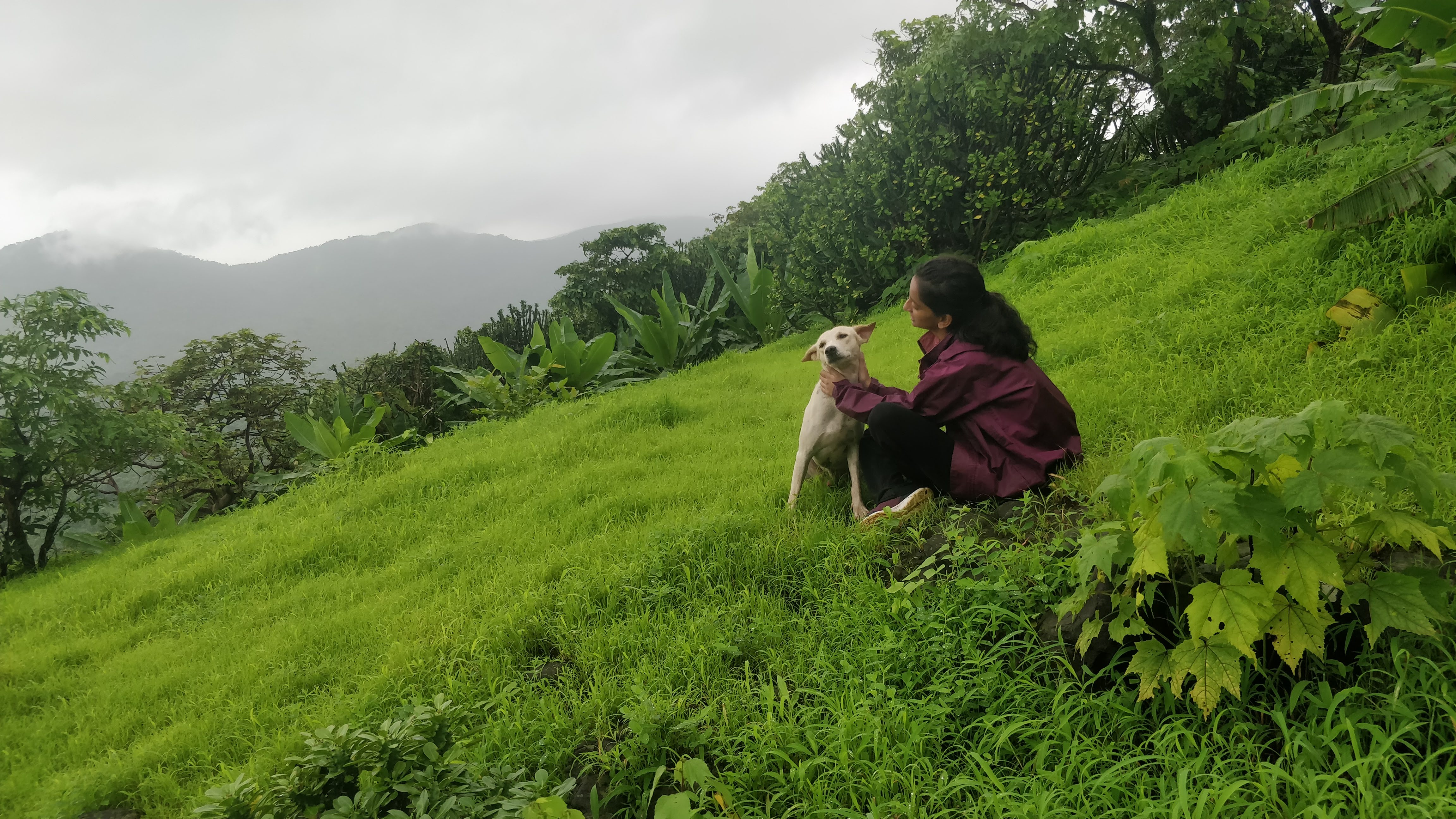
But the purest love I’ve ever felt? It’s been in the mountains. It’s the mountain dogs, those selfless, gentle souls who show me love at its rawest. They don’t care where you’ve been or who you are. They don’t weigh what you can give back. They just fall in step beside you. Through brutal weather, up the toughest trails, they stick around. It hits me every time: true love is just being there.

This Valentine’s Day, let’s celebrate love with our loved ones. But let’s also remember the love we build within ourselves. The love we share with the people around us. And the love we choose to step into steady, selfless, and pure, like a mountain dog. Love isn’t just about romance. It’s about how we show up, for ourselves and for others.

Return and Reconnect

Choosing to write the blog again

Question-Should I begin writing the blog? My inner voice- what’s the point in this fast-moving AI world? Don’t put the efforts, it’s not worth it, let it be. This conversation repeated in my head ever since April 2020 when I last wrote on this blog. Multiple things changed in my life ever since the lockdown-for the good. However, this answer didn’t change.

Today, I finally managed to revise the answer. 
Question-Should I begin writing the blog again? Me- I can write, I love to write so yes, I should. I am not a professional and I am grateful I don’t need to make this hobby into a profession today. Let me do this one thing in my life for the absolute love of doing it.

So here I am, penning my thoughts again on this blog. I decided to make this blog exist first and I’ll keep working on it to make it better. Will I finally spill the tea on all the travel and life happenings of the past few years? Or will I keep this blog simple like before? We shall find it out together soon.

Thank You for reading this far. If there’s something you love but haven’t done in a while, return to it and reconnect with yourself-purely for the love of it.

How to overcome __?

I was on a quest this week, I had to know how people process. How does the brain of various people work in times of need? I read online and even discussed with few friends to understand how they overcome obstacles.

When I begin to read about these online, common suggestions that came across were How to overcome self-doubt, anxiety, and more. When conversing with people the answers were I had the toughest time to overcome a gap year, a career change decision, fight with a best friend and more.

I have compiled a few things to try if ever you find yourself trying to overcome something. Whatever your __ be, that you are struggling with, I hope you are able to use either of the following.

Gain confidence

When one is facing a crisis, I believe the biggest loss is of confidence. Can I ever overcome this? Will this ever end? And more such questions pop in the head at the time of crisis. And the proven best way to build blocks of confidence is to work consciously do self-care.

Eating right and exercising are prime to-dos of self-care of the physical you. But, it is more important to take these seriously and put these things in your routine. Nothing will ever give results without continuous honest efforts.

Another aspect that gives confidence is when a person feels more knowledgeable. It is tough for non-readers to inculcate this one. Yet, one can try to read smaller articles on topics you love. Nurturing the knowledge seed leads to the budding of confidence.

Excess of anything is harmful

A difficult time makes the rational side of my brain weak. We tend to make decisions that we wouldn’t otherwise. We indulge in what gives us momentary pleasures more often. This is the foundation of maximum addictions that people have. It is important to be conscious of these actions.

To explain this one, I would give my example. Now that this pandemic crisis has chopped my travel wings, I have my many indoor things to do like the blog, journaling among others. However, indulging in these I still wasn’t able to get away from the morbid thoughts this pandemic gave.

So unknowingly I begin to worship my work. I clocked in more than nine hours a day past week without anyone demanding that much of me. It took me a while to understand this, but thanks to regular journaling I figured. I faced my consequences for doing so but better late than never, I began to give it a hard stop after my expected hours.

Being Grateful

One thing that has worked best for me is to remind myself of the things I am blessed with. There are so many things we take for granted, we only realize the worth of later. Each time one stupid thing gets me down, or one situation is up that makes life uneasy, I go to these many things I have written down like a list that I am blessed with and should be grateful for.

It doesn’t matter if you have a list, you may or may not want to write them all down either. But look around you, check your friend list, look at all the gadgets you own, the fancy trek shoes or any other things you possess, max part of humanity doesn’t have that kind of luxury. When the brain is churned to feel grateful for what exists, it helps to deal with the problem in hand better.

Time

Of course, the best healer is time. More often than not, whatever you fill your __ with as the title of this post, the answer would be time. You might do the above to give the situation time, or just carry on with your regular routine and let time work its magic. Either way, some situations get better only after a while. These are the ones you usually like the situations you laugh at later once you have lived it.

I hope this post gave you some food for thought. Hope you come back to it when you wish to overcome your __. @nishanavgire on Insta to discuss anything further.

Proudly powered by WordPress | Theme: Baskerville 2 by Anders Noren.

Up ↑